Affichage des articles dont le libellé est NA GRANE. Afficher tous les articles

OLGA & OLGA

OLGA & OLGA

trailer

link to film  

please ask for password: nagrane@gmail.com

30 min
b&w
language: Russian, English st
format: 16:9, HD
2017


DIRECTOR  Eléonore de Montesquiou
MUSIC  Tatjana Kozlova-Johannes
WITH  Olga Afanasyeva
AND  Olga Tüvi
TRANSLATION   Sergei Pogoreltsev
REVIEWING   Jenny Zinovieff
SOUND MIX Jochen Jezussek
MUSIC MASTERING   Tammo Sumera
LOCATION    Ivangorod and the river Narva, Russian-Estonian border
THE FILM IS DEDICATED to Olga Félicie Noëlle
PRODUCED WITH THE SUPPORT OF  Berlin Senat Film Funding and Eesti Kultuurkapital

--------------------------------------------------------------------------------------------------------------------------
Women struggling through life and their political environment. How Olga and Olga manage 
their relationship with men? What does feminism mean for them is the recurrent question 
that I have been asking Olga and Olga for almost ten years. 
Both Olgas live on the Estonian-Russian border. 
Olga Afanasyeva was born in Tver, she studied in Moscow before being displaced 
to a factory in Ivangorod in the 70s. Olga Tüvi was born in Narva, now Estonia, 
and worked as a metallurgist in a factory in Ivangorod. She has an Estonian passport 
and family but speaks only Russian. In the nineties, Perestroika times, they both 
lost their jobs, since factories were remodeled or closed down all over the ex-Soviet Union. 
Today, Olga Afanasyeva sells socks and pants in Ivangorod market, Olga Tüvi 
is responsible for the maintenance of lifts in panel housings in Ivangorod. 
The pensions that they receive in Russia allows them to live with one Euro a day, 
to make ends meet, they both smuggle things daily across the Estonian border. 
The men have disappeared from their lives.


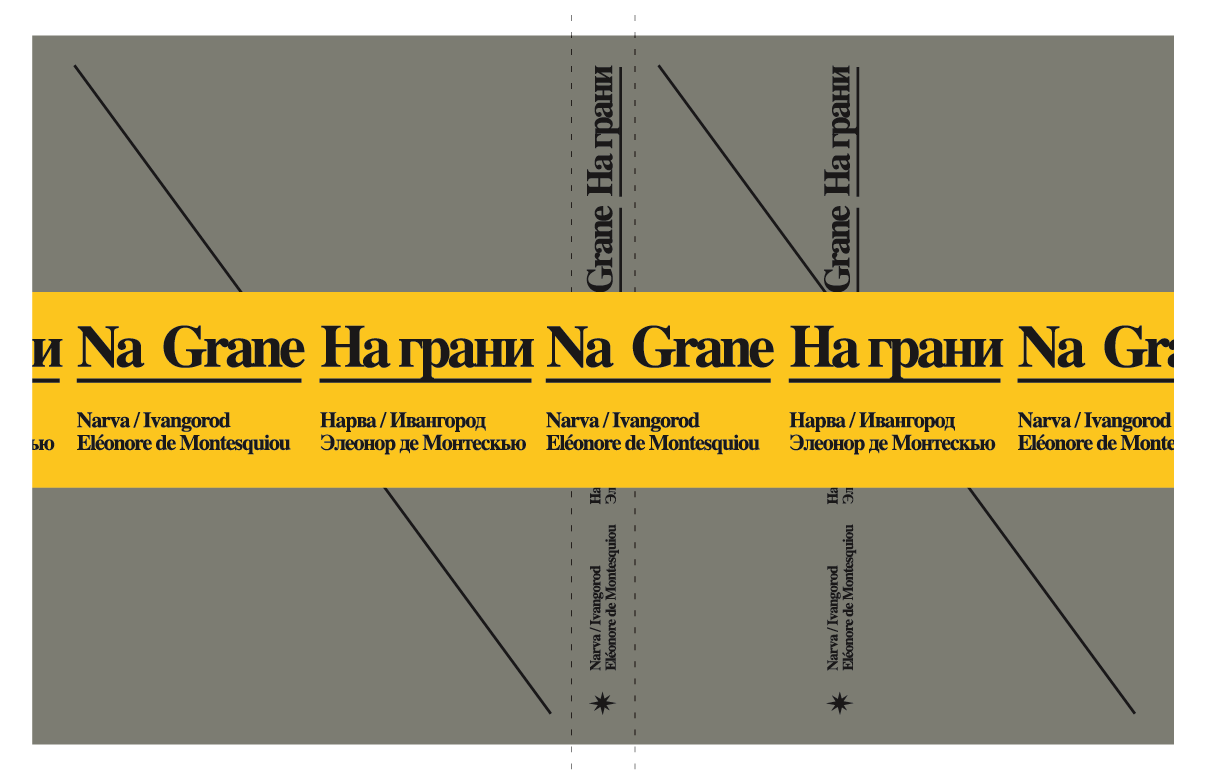
NA GRANE the book


NAGRANE
the book


Textes en russe, estonien, anglais et français
Traduction: Sergei Pogoloretsev, Anastasia Neuimina, Robin Hazlehurst, Justin Ions
Relectures: Kadriann Soosaar, Anna Canby Monk
240 pages
25 x 18, 5 cm
couleurs
Production: Kultuur Ministeerium Estonie, Transient spaces Berlin, Centre d’art Passerelle Brest.
2010
Estonie-Russie

distribution: http://www.argobooks.de

Montesquiou Montesquiou


VABRIK


VABRIK-KREENHOLM

FACTORY KREENHOLM


view the film

31 min.
b&w
Russian with EnglST
2010

with
Dora Grafova and Ekaterina Moskalenko


images:
Eléonore de Montesquiou
Narva Museum
Narva Kronika
Tallinn film archive

music and sound:
Marcel Türkowsky
Eléonore de Montesquiou


"Vabrik Kreenholm" assembles and updates the previous films about Kreenholm textile manufacture.
It is a film about the image of the factory: a textile manufacture in Estonia on the river border with Russia. "Vabrik", "factory" in Estonian, evokes the history of industry in the mid-nineteenth century to today. The images show the passages of the Soviet economy - in Estonia since 1944 - to the capitalist economy with its current limitations: factories closed because it can not continue to occur, we have moved from an economy in brandmaking technocrat and offshoring. The manufacture is still standing, and like a dinosaur is dying slowly. Several hundred workers are working today, whereas before the privatization of perestroika were 15,000.
The factory was the vital center of the city of Narva, all families worked for generations on its territory. There were clinics, nurseries, schools, libraries ... With some beautiful images of soft propaganda of the years 60-70s and later with my images tracing the last days of the factory, my film questions this image of the factory and how one can understand ist current developments. My pictures, first weaving images of the past and working units of printing, then sewing and packaging are calmly desperate, because these are the latest scores workers facing dismissal.


--------

Elke Falat
„Vabrik“ ein Film von Eléonore de Montesquiou


Biografisch grundiert und motiviert beschäftigt sich die französisch estnische Künstlerin Eléonore de Montesquiou seit mehreren Jahren mit den Transformationsprozessen in der früheren Sowjetrepublik Estland – dem derzeitigen „Musterschüler“ der EU.
Die Geschichte der Textilfabrik Kreenholm bildet den Ausgangspunkt der in der Ausstellung „Vabrik“ versammelten Videoarbeiten, Fotografien und Zeichnungen, die symptomatisch die Zerrissenheit und Prägung der Menschen zwischen Sprachen, Kulturen und politischen Systemen schildert. Die Fabrik befindet sich in der estnischen Grenzstadt Narva, die seit der Unabhängigkeit Estlands 1991 in den estnischen Teil Narva und den russischen Teil Ivangorod 
geteilt ist. Das bedeutet: die Bewohner der Stadt benötigen ein Visum, wenn sie über die Brücke von Ivangorod in den anderen Stadtteil Narva gehen, da sie dabei eine EU-Außengrenze und Schengen-Grenze überqueren.

Poetisch und präzise gleichermaßen erzählt Eléonore de Montesquiou in der Videoarbeit „Vabrik“ (2010) die Geschichte der 1857 gegründeten Textilfabrik. Über ein Jahrhundert sicherte die Fabrik den Menschen in der Region die Existenz, beschäftigte in Hochzeiten bis zu 12.000 Arbeiter, wurde 1991 privatisiert und 2009 endgültig geschlossen. Das in der Videoarbeit verwendete Archivmaterial aus Sowjetzeiten verweist auf die frühere Größe und die glanzvollen Zeiten der Fabrik. Bilder von Tanzveranstaltungen, stolz präsentierten Babys im werkseigenen Krankenhaus sowie Aufführungen von Kindern im Kindergarten zeugen davon, dass die Fabrik nicht nur Arbeitsplatz war, sondern von Geburt an in alle Bereiche des Lebens der Arbeiter wirkte und dieses über Generationen hinweg prägte. Das schwarzweiße Archivmaterial zeigt auch die Arbeitsabläufe und Fertigungsprozesse in der Fabrik. Was wie beiläufig aufgenommen wirkt und authentisch- dokumentarischen Charakter verheißt, ist genauso wie die Fotografien im Nebenraum die inszenierte Realität der Repräsentation von Arbeit in der UdSSR. Das Archivmaterial ergänzt die Künstlerin durch ihr eigenes Material, das sie während ihrer zahlreichen Aufenthalte vor Ort aufgenommen hat und das bereits das Ende der Fabrik markiert. Im Gegensatz zu den sozialistischen Aufnahmen wird hier die Abwesenheit von Arbeit sichtbar. Diese Bilder sind ebenfalls in schwarzweiß gefilmt. Durch die farbliche Angleichung des unterschiedlichen Materials werden die verschiedenen Zeitebenen aus den 60er und 70er Jahren bis zum Zeitpunkt der Schließung in 2009 miteinander verwoben und verdeutlichen damit, wie stark die Vergangenheit immer noch nachhallt.https://vimeo.com/120145195

KREENHOLM -the manufacture


KREENHOLM
the manufacture


lien vimeo: https://vimeo.com/51593288


Part 1: a history of textile industry


25 min.
2009
original language: Russian
w/ English subtitles (or Estonian)
black and white
Estonia


images: Narva Museum photo and film archive
and Eléonore de Montesquiou

music and sound: Marcel Türkowsky


In February 2008, a worker showed me around the Kreenholm textile factory. It was a one-day opportunity to film inside a factory which is gradually closing down and this employee, an electrician who has been working there for forty years, would soon lose his job. Inside the factory, I filmed the last days of the spinning and weaving machines.
My film tells the story of this textile factory at the border of Estonia and Russia through the memories of an elderly woman, Dora. She recalls how her family’s story is intertwined with that of the fabric, and of the generations that have worked there. Kreenholm was a unique example of 19th century industrial organisation..
The last decades of its life as a factory reflect the current development of the textile industry from technocracy to brand-building and marketing. Delocalization, restructuring and globalization are all well-known today and in this region they have induced an economic disaster -- specifically for the cities of Narva and Ivangorod.

The film alternates between images of Kreenholm today and from historical photographic and film archives.

KREENHOLM -the last units


KREENHOLM

Part 2: The last units


15 min.
2009
original language: Russian
w/ English subtitles (or Estonian)
black and white
Estonia


Summer 2009: I found that the buildings I visited previously had all closed down. However, I was permitted to film the last production units operated by a few hundred workers: bleaching, printing and sewing fabrics imported from Turkey, India and Pakistan.

GAZETTE


GAZETTE

view the film


2009, 04 min. 12

b&w

Russian with Engl. text

with Dora Grafova

Dora Grafova, a woman in her eighties, talks about the various magazines that she used to subscribe to during Soviet times. She received seventeen different monthly magazines for herself, her husband and her son: about gardens, about the world, about techniques, about women and about growing potatoes. She has kept them all in her apartment in Narva.


------------------------


2009, 04 min.12
s/w
russisch mit engl. uT
mit Dora Grafova

Dora Grafova, eine achtzig-jährige Frau, erzählt von den verschiedenen Zeitschriften, die sie zur Zeit der Sowjetunion abonniert hatte. Damals erhielt sie siebzehn verschiedenen Monatszeitschriften: für ihren Mann, ihren Sohn und sich selbst: über Gärten, die Welt, Technik, Frauen und über den Anbau von Kartoffeln. Sie hat sie alle in ihrer Wohnung in Narva behalten.
------------------------------

THE STATION


THE STATION


2 min.26
2009
Russian, Engl. ST
B&w

A young man whom I met at a bus station somewhere between Narva and Saint Petersburg explains why he first left Narva, why he longer wishes to live there, and about his hopes for the future.

TALLINN& PITER


TALLINN& PITER


4 min 08
2009
Russian w/ Engl. sT
Music: Red Sparrows
Color


- Sasha, Nastja and Tanja discuss the differences between Tallinn and Saint Petersburg (Piter). Their opinions differ as to which is preferable for going clubbing and shopping for clothes, and concerning their relationship to both Russians and Estonians.

Tanja and Sasha are brother and sister; Nastja is Sasha’s wife. All three grew up between Russia and Estonia, crossing the border daily. Having decided to be Estonian, Tanja now lives and works in Tallinn; whereas Sasha and Nastja, who speak only Russian, prefer to live in a Russian environment and have stayed in Ivangorod. Their argument is indicative of the different orientations chosen by young Russian-Estonian people from the border region.

The film was shot on the banks of the Narva river, which marks the border between Estonia and Russia.

KALAMEES – Рыбак –


KALAMEES – Рыбак –

view the film:
- part 1
- part 2


Фильм Элеонор де Монтескю
звук: Татьяна Козлова
с участием Саши и Насти Калядиных

продолжительность: 30 минут
Фильм KALAMEES является частью проекта «На грани»


Саша – рыбак. Зимой с другими рыбаками он уходит на целый день на рыбалку на замерзшие озера и реки. Некоторые из них делают отверстие во льду и сидят, иногда весь день, на холоде в ожидании клева. Две общие страсти рыбаков: уходить вместе на ежедневные приключения и очень уединенно сидеть отдельно друг от друга, едва общаясь.
Саша вырос в Ивангороде, его родители отдали ему квартиру в самом высоком здании города. Сейчас Саша (ему почти 30 лет) работает на заводе Krenholm в Нарве (Эстония). Он переходит русско-эстонскую границу ежедневно.
«Мой фильм – это портрет Саши, его тихой рыбалки, история о том, как он сопротивляется холоду. Через его портрет, его слова поднимается проблема специфической ситуации Ивангорода: что значит жить прямо на границе? На границе между Россией и Эстонией, на самом крае Европы, на границе, которой не существовало, когда Саша родился. Сашина мама – Ольга сказала мне однажды, что она уже не знает откуда она, к какой стране она принадлежит: эстонка живущая в России, говорящая только на русском, или русская, живущая почти в Эстонии, замужем за эстонцем и чьи дети оба работают в Эстонии».

KALAMEES


KALAMEES
-the fisherman-


English presentation
scroll down for German and French

----------------------

23 min.10 (English or Estonian text)
26 min.10 (French version with overvoice)

2009
color
original language: Russian

with Nastja and Sasha Kaljadin

a film by Eléonore de Montesquiou

original music by Tatjana Kozlova


this film was made on the lake Peipsi which marks the border between Russian and Estonia

Voices
Nastja Kaljadina, Sasha Kaljadin, Tanja Kozlova

Voices In English:
Philipp Donstov, Anastasia Neuimina

Voices in French:
Eugène Sviridov, Anastasia Neuimina

Musicians:
Raul Aan, Kristi Mühling, Vambola Krigul, Tarmo Johannes, Jandra Puusepp


Sasha is a fisherman. In the winter, he goes out with others for one day, on the frozen lakes and rivers. Each of them makes a hole in the ice and stays sometimes all day long, in the cold, waiting for the fish. It is both a common passion the fishermen share, leaving together for the daily adventure, and a very solitary one, they all sit apart from each other and hardly communicate.
Sasha grew up in Ivangorod, his parents were given an apartment in the highest building of the city, overlooking the river, the bridge, in a word the border. Now Sasha is in his late twenties, he works in Krenholm’s fabric, in Narva –Estonia- he walks the Russian-Estonian border daily, he goes out at night in Saint Petersburg and doesn’t speak a word of Estonian
My film is a portrait of Sasha, of his silent fishing, how he is organized to resist the cold. Through this individual portrait, his words raise the issue of Ivangorod’s particular situation: what does it mean to live right on a border? On the border between Russia and Estonia, on the very edge of Europe, a border which did not exist when Sasha was born. Sasha’s mother, Olga, told me once that she did not know where she came from anymore, where she belongs to, in between: Estonian, living in Russia, speaking only Russian or Russian living almost in Estonia, married to an Estonian man and whose children both work in Estonia.


---------------------------------------


Russland/Estland 2009
Farbe, Sound, 23 Min.10
Russisch mit engl. oder estn. UT
mit Nastja und Sasha Kaljadin
Musik: Tatjana Kozlova

Musiker: Raul Aan, Kristi Mühling, Vambola Krigul, Tarmo Johannes, Jandra Puusepp


Dieser Film wurde auf dem Peipus-See gedreht, der die Grenze zwischen Russland und Estland markiert. Sasha ist ein Fischer. Im Winter fischt er auf den zugefrorenen Seen und Flüssen. Wie jeder Fischer macht er ein Loch in das Eis und bleibt manchmal den ganzen Tag lang in der Kälte, auf den Fisch wartend. Er teilt die gemeinsame Leidenschaft der Fischer, die Einsamkeit; alle sitzen weit voneinander entfernt und kommunizieren kaum.
Sasha wuchs in Iwangorod auf. Seine Mutter hatte eine Wohnung im höchsten Gebäude der Stadt, mit Blick auf den Fluss und die Brücke: Die Grenze. Heute ist Sasha Ende Zwanzig, er arbeitete bis 2008 bei dem Textilhersteller Krenholm in Narva - das jetzt zu Estland gehört - und überquert die russisch-estnische Grenze täglich. Nachts zum Clubbing fährt er nach Sankt Petersburg, lieber als nach Talllinn. Sasha spricht kein Wort Estnisch.
Mein Film ist ein Portrait von Sasha, von seiner stillen Fischerei, wie er organisiert ist, um der Kälte zu widerstehen. Aber mehr als ein Portrait wird durch seine Geschichte, seine Worte, die Frage der besonderen Situation Iwangorod's gestellt: Was bedeutet es, direkt an der Grenze zu leben? Die Grenze zwischen Russland und Estland, am Rande Europas, die nicht existierte, als Sasha geboren wurde. Sashas Mutter, Olga, erzählte mir einmal, dass sie nicht wissen, wo sie hingehören, irgendwo dazwischen: Esten, die in Russland leben und die nur russisch sprechen? Oder Russen, die in Estland leben? Am gefrorenen See steht Sasha als hätte er die Grenzen überwunden.


---------------------------------------
Deux versions:
26 min.10 avec doublage
23 min. 10 avec texte
2009-
musique originale: Tatjana Kozlova
avec Sasha Kaliadine and Nastia Kaliadina
langue orginale russe, doublage en français


Sasha est pêcheur. L’hiver, il pêche sur la glace, sur les rivières ou les lacs gelés à la frontière entre l’Estonie et la Russie. C’est une passion commune aux pêcheurs qui la pratiquent en groupe ou seuls pour s’isoler de leur famille, des villes, s’éloigner du quotidien.

Sasha est depuis toujours sur la frontière, né à Narva (Estonie), il a grandi de l’autre côté du pont, à Ivangorod (Russie). Aujourd’hui, Sasha a 28 ans, il travaillait à l’usine de Kreenholm, à Narva. L’usine en failite, il a reçu une formation de conducteur de bus. Tous les jours il passe la frontière à pied. Le week-end, il sort en boîte à Saint Pétersbourg l’été et va pêcher l’hiver.
Sasha a un passeport estonien et un passeport interne russe. Il parle russe, mais pas un mot d’estonien. Il dit ne vouloir vivre ni en Estonie, ni en Russie, mais dans cet entre-deux qu’est Narva-Ivangorod.

Mon film est un moment en suspension dans cet entre deux qu’est le lac gelé entre la Russie et l’Estonie. J’ai accompagné Sasha l’hiver dernier sur la glace, et l’ai filmé. J’ai recueilli ses propos, quelques mots, son activité de pêcheur, ses sentiments quand à sa situation très singulière: que cela signifie-t-il de vivre sur une frontière à la limite de l’Europe? Comment s’organise-t-il pour la pêche dans ces conditions de froid extrême?
Peu de paroles, le son du film est composé par Tanja Kozlova, la compositrice avec laquelle j’ai réalisé mon dernier film “Sillamäe”.

NAINE


NAINE
- a woman -


view the film

English presentation
scroll down for German and French

------------------------------------------

15 min 10
b&w
original Russian
English, French or Estonian subtitles


Sound: Tatjana Kozlova
With Olga Tüvi


Images: women bathing in the river Narva, border between Estonia and Russia and archive images of women attending sport events in the region during soviet time.
I filmed Olga and her friend, another Olga, bathing in the border river Narva. Their bodies reflect the strength that they have needed till now. These images are b&w in order to link them to the archive images.

Sound: monolog by Olga, a woman with both Russian and Estonian passports, making a living by crossing the border daily. Olga was born in the fifties in the Soviet city of Narva-Ivangorod now split between Estonia and Russia.
Music: composed by Tanja Kozlova (Estonian contemporary composer, who was born on the Russian side of the border and lives now in Tallinn)

Olga is in her fifties. She has both Estonian and Russian passports, she speaks only Russian. She was born in Narva (now Estonia) and lives in Ivangorod (now Russia), two cities facing each other on either side of the river. Olga speaks about herself as a woman of Perestroika. In this film she talks about going through these times with two children. She raises the issue of living on the very edge of Europe and tells about her relationship to work then and today. Olga used to work in a factory that closed in the mid-eighties. More than a personal portrait, in this film, her voice speaks for numerous women of her generation, living in between the former Eastern-Soviet States and Russia, imagining day to day solutions to survive in this precarious and constantly changing status.


------------------------------------


s/w, 15 min.
Russisch mit engl./franz./estn. UT
Musik: Tatjana Kozlova


Olga ist um die 50 Jahre alt. Sie hat sowohl einen estnischen als auch einen russischen Pass, ihre Nationalität und Sprache sind jedoch russisch. Sie wurde in Narva (das jetzt zu Estland gehört) geboren und lebt in Iwangorod (jetzt Russland), zwei Städte, die an den beiden Ufern des Flusses Narva liegen. In dem Film spricht Olga als Frau der Perestroika-Zeit, sie erzählt davon, wie man während dieser Zeit mit zwei Kindern überlebt. Sie wirft die Frage eines Lebens am äußersten Rand Europas auf und erzählt von ihrem Verhältnis zur damaligen und zur heutigen Arbeit. Mitte der achtziger Jahre arbeitete sie in einer Metallfabrik, die geschlossen wurde, woraufhin sie einen Job in einem Krankenhaus in der Stadt Narva bekam. Da sie eine Wohnung im (jetzt) russischen Teil der Stadt bekommen hatte, verlor sie ihren Job, als Estland wieder unabhängig wurde. Danach arbeitete sie einige Jahre als Marktverkäuferin, nun geht sie zweimal am Tag über die Grenze um ihren Lebensunterhalt zu verdienen. Sie ist Anführerin einer kleinen Gruppe, die inerhalb der Grenzen des Systems zugelassene Mengen von verschiedensten Waren zwischen Estland und Russland schmuggeln.

"Die Bilder wurden mit einer Videokamera im Sommer 2008 gedreht. Ich filmte Olga und ihre Freundin, eine andere Olga, beim Baden im Grenzfluss Narva. Ihre Körper spiegeln die Stärke wieder, die sie bis jetzt gebraucht haben. Diese Bilder sind schwarz/weiß um sie mit den Archivbilder zu verbinden.
Der Film ist mehr als ein persönliches Portrait, da Olga für viele Frauen ihrer Generation spricht, die zwischen den ehemaligen ostsowjetischen Staaten leben, die jetzt zu Europa und Russland gehören. Sie finden täglich Lösungen, um in diesem prekären und sich ständig verändernden Status zu überleben."


-------------------------------------------


15 min.10, 2009
un film de Eléonore de Montesquiou
musique: composée par Tanja Kozlova et Malle Maltis
avec Olga Tyuvi / noir et blanc
langue orginale russe, sous-titrage en français

Images: des femmes se baignent dans la rivière Narva qui marque la frontière entre la Russie et l’Estonie. Ces images alternent avec des images d’archives d’évenement sportifs dans la région à l’époque soviétique.

Son: une conversation avec Olga, une femme avec la double citoyenneté russe-estonienne. Née à Narva, vivant à Ivangorod, Olga travaillait à l’usine avant Perestroika, elle a perdu son travail comme tant femmes de cette génération au début des années 90. Elle a travaillé longtemps sur les marchés et vit maintenant d’un petit traffic de biens sur la frontière, profitant des limites du système –quantités de biens autorisés à chaque passage frontalier.

A la frontière entre l’Europe –l’Estonie- et la Russie, une frontière qui n’existait pas à sa naissance, Olga me disait un jour, ne pas savoir à quel côté elle appartient, Estonienne vivant en Russie, ne parlant pas un mot d’estonien, sa fille vit à Tallin, son fils est resté à Ivangorod.

Elle raconte son expérience des années Perestroika, son rapport aux hommes, ses allers-retours entre l’Estonie et la Russie.

Images et voix sont dissociés, Olga parle seule, plutôt qu’un interview, ce film est un monologue et plus qu’un portrait individual, le portrait de cette génération de femmes survivant dans cet entre-deux précaire.

KEEL


KEEL –language-

13 min.
2009
b&w
images: Eléonore de Montesquiou and archive images (Sillamäe television)
music: Liis Jürgens
original language: Estonian
subtitles: Russian or English


Riina Salak is an Estonian language teacher in a Russian kindergarten in a Russian area of Tallinn.
She explains how she teaches Estonian language to the Russian kids, or tries to teach them in a one-hour per week course.
She talks about language issues in Estonia - since language is either an integration tool or a handicap, it has always been socially and politically loaded because Estonia has been occupied first by the Germans, and then by the Russians, who each imposed their language on the population.
My film raises fundamental questions about displacement, integration into a new environment and education through relatively simple means, if they are respected in childhood.

MOST


MOST
The bridge
Narva-Ivangorod


2009
8 min. 13
music from: „tribute to sun ra“ francois robert lloyd & gregoire garrigues

The bridge “Friendship” on the Narva river marks the border between Europe (the Estonian city of Narva) and Russia (the city of Ivangorod). In the aftermath of the collapse of the Russian Empire, the newly independent Republic of Estonia gained control over the whole town of Narva, including Ivangorod, in January 1919, and it was subsequently recognized by Soviet Russia in the 1920 Treaty of Tartu. Having reoccupied Estonia during World War II in 1944, the Soviet authorities separated Ivangorod administratively from the rest of Narva, and transferred the territory to the Leningrad Oblast of the Russian SFSR in January 1945. Ivangorod received the status of town in 1954.

Until 1991, Narva and Ivangorod lived one life despite being located in different Soviet republics.
Many residents of Ivangorod worked in Narva, and vice versa. The local economy was so intertwined that some enterprises provided their staff with apartments on the other side of the river - a phenomenon that would later lead to the separation of many families.
The bridge is crossed daily by inhabitants of Narva or Ivangorod, who go shopping in Russia where goods are cheaper and use the border situation to make some money by crossing with commodities.

Economic ties between the two cities were cut when the international border appeared along the Narva River. After Estonia regained independence in 1991, the border as per 1920 Treaty of Tartu was considered by Russia legally superseded by an administrative border between two former Soviet republics drawn later by the Soviet authorities. Ivangorod thus remained a part of Russia. Due to political tensions, a new border treaty between Estonia and Russia has not yet come into force. On the edge of Europe, this zone is a strong border with a severe visa policy though it is also a bridge between two parts of one city.

I filmed people crossing the bridge, they were on the other side of the fence, it was an unbearable sensation of how easily a harsh geopolitical situation can dictate everyday moves.
Until 1991, Narva and Ivangorod lived one life despite being located in different Soviet republics. Many residents of Ivangorod worked in Narva, and vice versa. The local economy was so intertwined that some enterprises provided their staff with apartments on the other side of the river - a phenomenon that would later lead to the separation of many families.
Economic ties between the two cities were cut when the international border appeared along the Narva River. After Estonia regained independence in 1991, the border as per 1920 Treaty of Tartu was considered by Russia legally superseded by an administrative border between two former Soviet republics drawn later by the Soviet authorities. Ivangorod thus remained a part of Russia. Due to political tensions, a new border treaty between Estonia and Russia has not yet come into force.

I filmed people crossing the bridge, they were on the other side of the fence, it was an unbearable sensation of how easily a harsh geopolitical situation can dictate everyday moves.